Spaces of Belonging – The Architecture of Muzharul Islam
Date: 25 April 2026
Venue: IAB Multipurpose Hall, IAB Centre, Dhaka
The book launch event for Spaces of Belonging – The Architecture of Muzharul Islam was held on 25 April 2026 at the IAB Multipurpose Hall, IAB Centre, Dhaka, bringing together architects, academicians, professionals, and distinguished guests to celebrate the architectural legacy of Bangladesh’s pioneer of modern architecture, Architect Muzharul Islam.
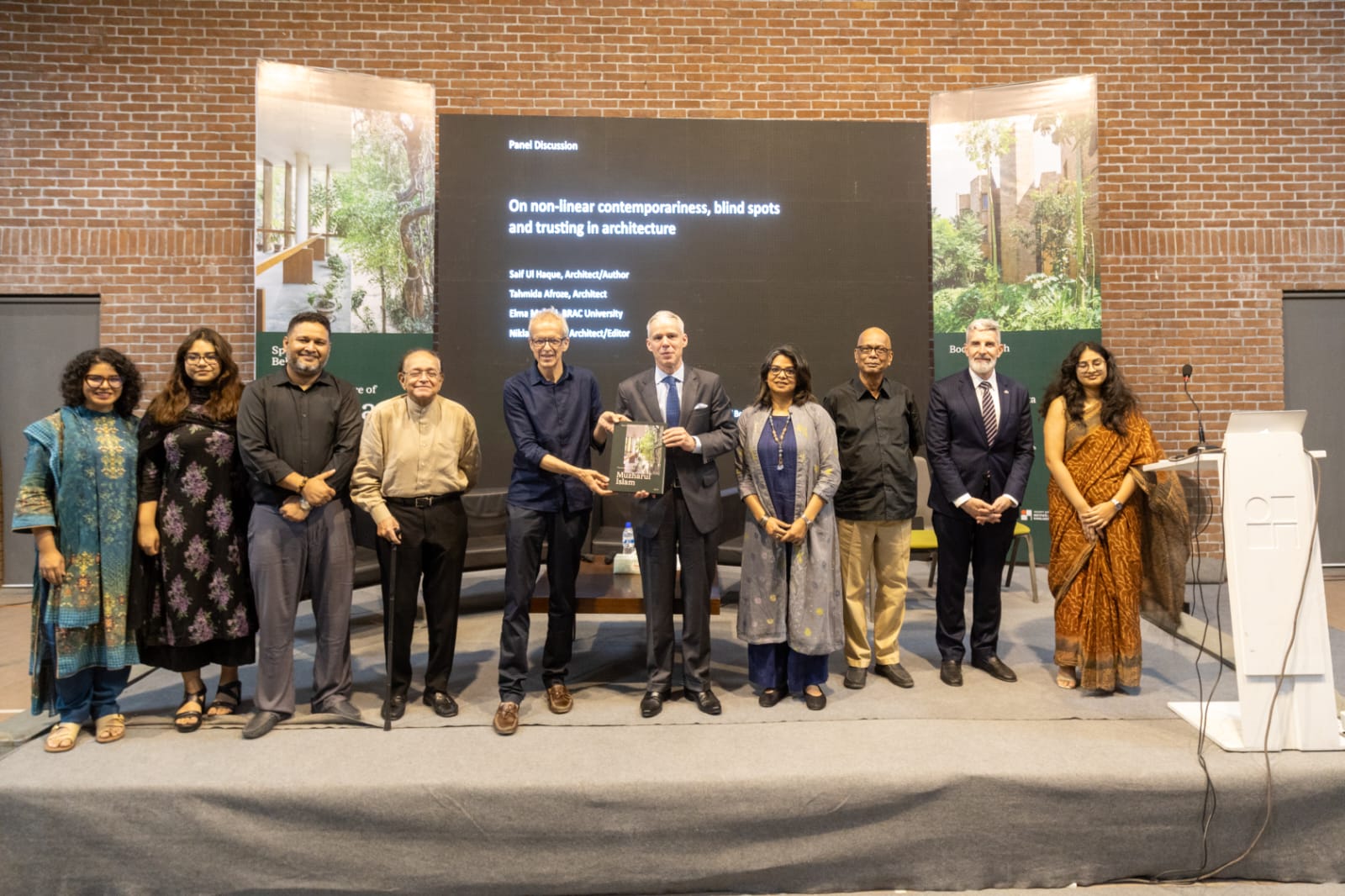
The event began with welcome greetings by Alberto Giovanetti, Counsellor and Head of Political, Economic & Communication Affairs, Embassy of Switzerland, who warmly welcomed all attendees and highlighted the significance of the occasion. He then invited His Excellency Reto Renggli, Ambassador of Switzerland to Bangladesh, to deliver the Welcome Note.
H.E. Reto Renggli spoke about the remarkable legacy of Muzharul Islam and emphasized how the book serves not only as a documentation of his architectural works but also as a bridge of cultural dialogue between Switzerland and Bangladesh. He mentioned that several exhibitions had already taken place around the publication and its contents, reflecting the growing international interest in Muzharul Islam’s work. He expressed the Swiss Embassy’s gratitude for being part of this important initiative and stated that the book enriches continental exchange, intellectual collaboration, and cultural understanding between the two nations.
Architect Nowajish Mahbub, Vice-President (National Affairs), Institute of Architects Bangladesh (IAB), delivered his remarks by welcoming the guests and reflecting on Muzharul Islam’s “spaces of belonging.” He described him as an extraordinary legacy whose buildings, original drawings, and photographs have now been thoughtfully documented in the book. He highlighted Muzharul Islam’s diverse perspective, climate-responsive design approach, and his remarkably forward-thinking vision. He also extended special thanks to the editor, Niklaus Graber, for his significant contribution in bringing this important publication to life, describing the book as a strong cultural connection between Switzerland and Bangladesh.
Representing the Muzharul Islam Archive, Ar. Dr. Md. Nawrose Fatemi, Head of the Department of Architecture at the University of Asia Pacific (UAP), spoke about the publication as an example of meaningful cross-cultural collaboration. He described the book as deeply rooted in historical and architectural context and referred to it as a living dialogue between Switzerland and Bangladesh. He expressed hope that the book would travel far and make a meaningful contribution to global architectural discourse.
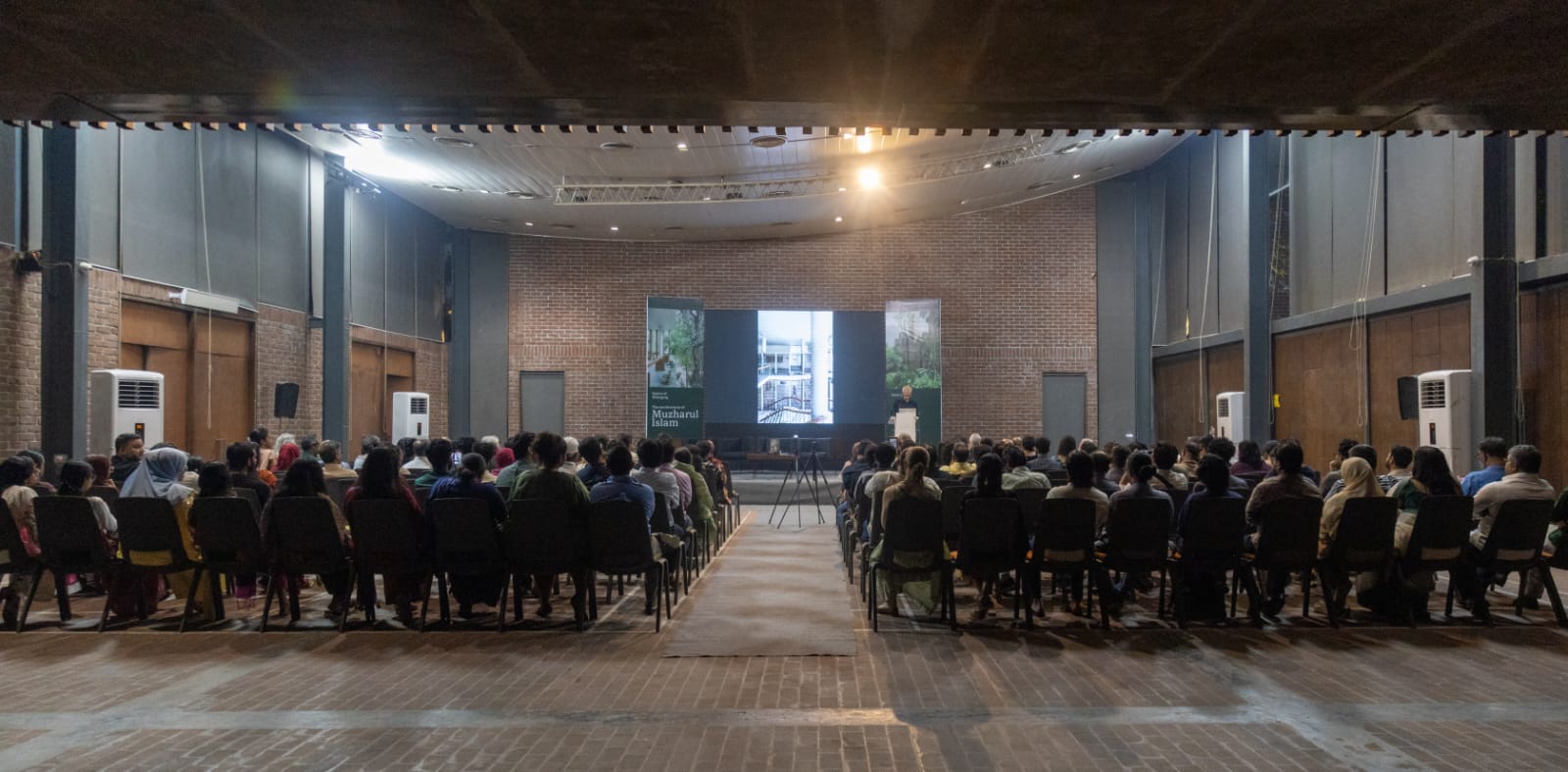
Niklaus Graber, editor of the book, then delivered a thoughtful presentation on his journey of documenting Muzharul Islam’s architecture. He shared how both Muzharul Islam and Louis I. Kahn inspired his engagement with Bangladesh and explained the deep connection between architecture and the rivers of Bangladesh. He described rivers as the soul of Bangladesh and reflected on how this understanding shaped his perception of architecture in the country. Through his extensive documentation and photography of Muzharul Islam’s buildings, he gradually understood that the architect was driven by a profound curiosity and a continuous search for meaningful questions. He presented the audience with the structure of the book, explaining that ten major buildings by Muzharul Islam were fully documented. He also emphasized that Muzharul Islam’s architecture was never about renders or three-dimensional representation, but rather about the precision, discipline, and detailing of two-dimensional drafting. He described him as the father of modern architecture in Bangladesh who initiated a new architectural era in the country.
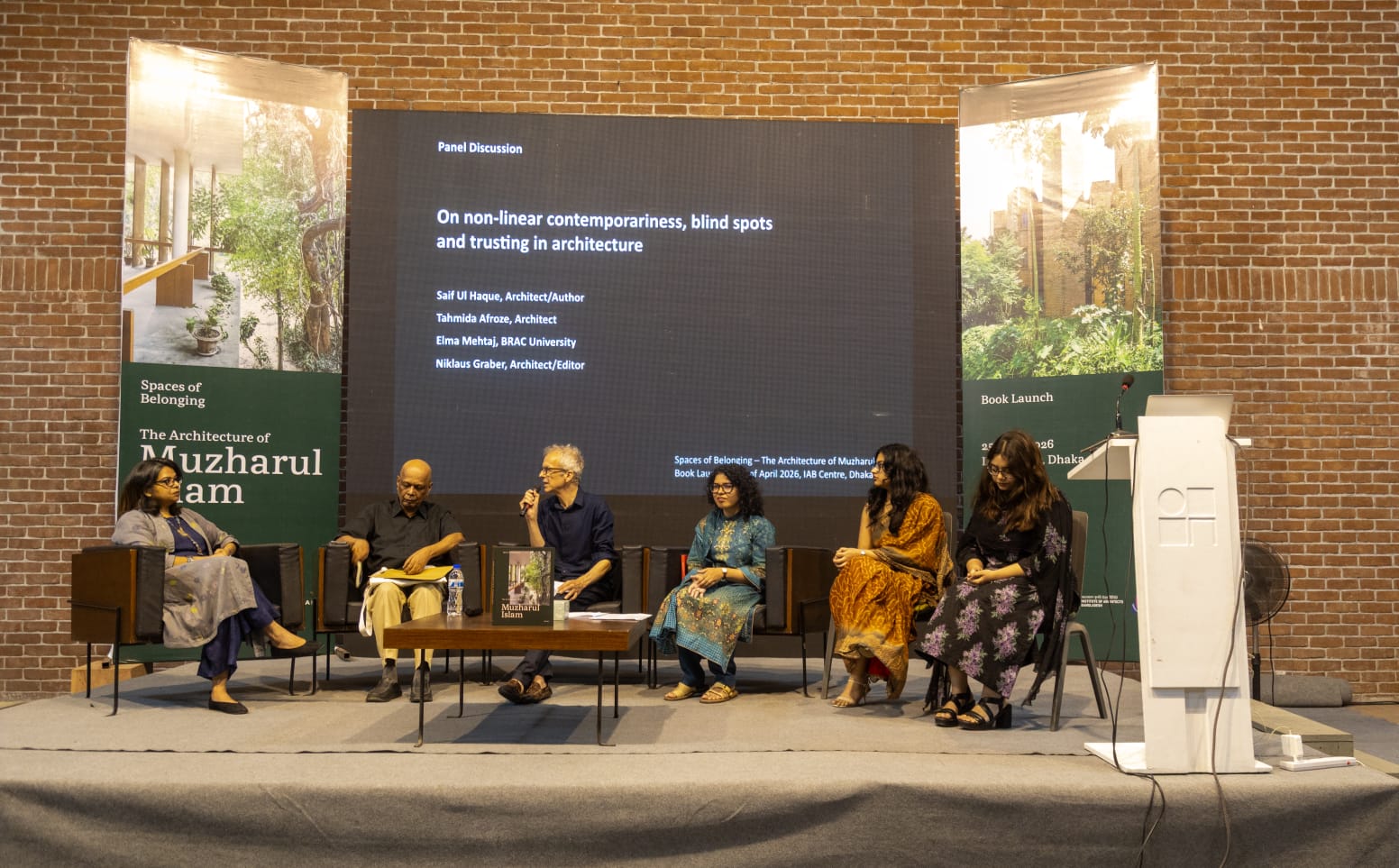
The event concluded with an engaging panel discussion featuring Architect and author Saif Ul Haque, Architect Tahmida Afroze, Elma Mehtaj from BRAC University, and Niklaus Graber as panelists. The discussion centered on the relevance of Muzharul Islam’s philosophy in contemporary architectural practice and education.
The panelists reflected on how Muzharul Islam’s work continues to influence younger generations of architects through his sensitivity to place, climate, culture and 2D drawings, The beauty of details. They discussed how his architecture was deeply rooted in context and identity, rather than aesthetics alone. His approach to modernism was presented as thoughtful, human-centered, and regionally grounded—qualities that remain highly relevant today.
Saif Ul Haque highlighted the importance of preserving not only Muzharul Islam’s physical works but also his intellectual values and design ethics. Tahmida Afroze discussed the significance of documentation and how books like this create opportunities for future research and learning.Niklaus Graber added that the book was intended not only as an archive but also as an invitation for continuous dialogue across cultures and generations.
Overall, the launch of Spaces of Belonging – The Architecture of Muzharul Islam was not merely a book launch, but a meaningful celebration of architecture, cultural exchange, and the enduring legacy of one of Bangladesh’s greatest architects.